|
John Piper (1903–1992)
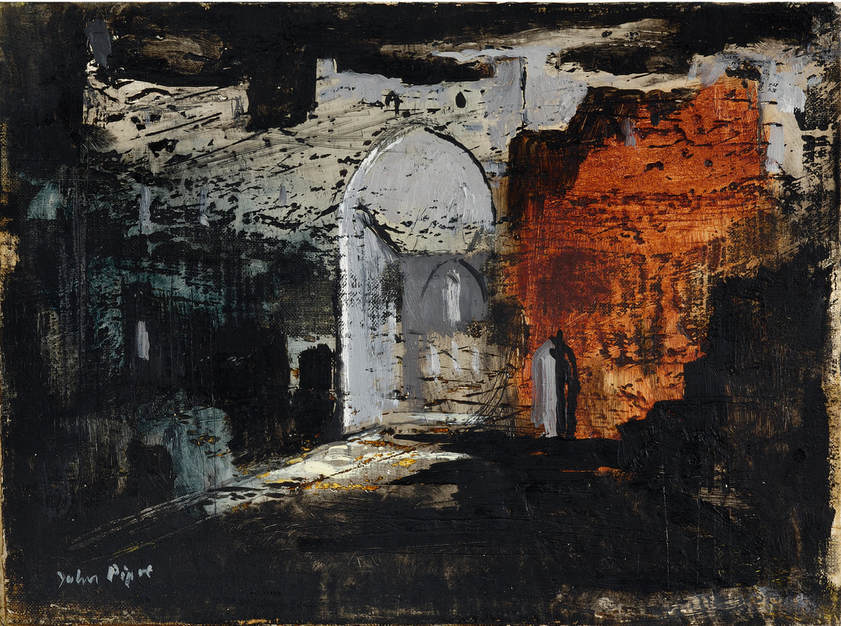
Rievaulx 1940 Oil on canvas laid on panel 15 x 20 cm (6 x 8 inches) Signed b.l. and inscribed ‘Rievaulx (oil) John Piper’ verso PROVENANCE Lefevre Gallery, London; Sir Duncan Oppenheim; his sale, Christie's, London, 6 June 2003 (lot 55); Private Collection. EXHIBITED John Piper 1903–1992, The Fine Art Society, London, May–June 2012 (4, illustrated in colour). |
|
Painted in 1940, one of the darkest and most uncertain years in British history, Rievaulx belongs to a remarkable group of works in which John Piper explored the great ruins of Britain at a moment when the nation's own future seemed precarious. As the threat of invasion loomed and Britain stood alone against Nazi Germany, Piper travelled widely, recording ancient churches, castles and abbeys whose weathered stones bore witness to centuries of upheaval and survival.
The ruins of Rievaulx Abbey held a particular fascination for the artist. Founded in 1132 and left roofless after the Dissolution of the Monasteries, it embodied both loss and endurance, themes that resonated powerfully in wartime Britain. Here Piper transforms the abbey into a dramatic vision of light emerging from darkness. Broad passages of black and deep blue frame the composition, while the illuminated architecture glows with white and burnt orange, creating an atmosphere that is at once sombre and profoundly hopeful. Although rooted in direct observation, the painting is imbued with the poetic spirit of Neo-Romanticism. The abbey becomes more than an architectural subject; it is a symbol of continuity and resilience. In a year when Britain's future appeared uncertain, Piper found in these ancient ruins a powerful reminder of endurance, creating a work of remarkable emotional intensity. |